
Machines and components
Registration, survey and technical verification have distinct states.

Software, data and automation with clarity and human control.

Industrial Maintenance Management
Machines, people and decisions connected through a maintenance workflow.
Personal2023 to 2026
Figma · Python · HTML · CSS · JavaScript · Node.js · SQLite



C:\HEFESTO> type hefesto_cmd.py

import sqlite3
from pathlib import Path

SCRIPT_DIR = Path(__file__).resolve().parent
DB_DIR = SCRIPT_DIR / "data"
DB_PATH = DB_DIR / "hefesto.db"

def conectar_db():
    """Conecta ao banco de dados SQLite."""
    try:
        DB_DIR.mkdir(parents=True, exist_ok=True)
        conn = sqlite3.connect(DB_PATH, timeout=10, detect_types=sqlite3.PARSE_DECLTYPES | sqlite3.PARSE_COLNAMES)
        conn.row_factory = sqlite3.Row
        conn.execute("PRAGMA foreign_keys = ON;")
        return conn
    except sqlite3.Error as e: print(Fore.RED+f"Erro CRÍTICO DB Connect: {e}"); time.sleep(5); exit(1)
Real code / Python prototype

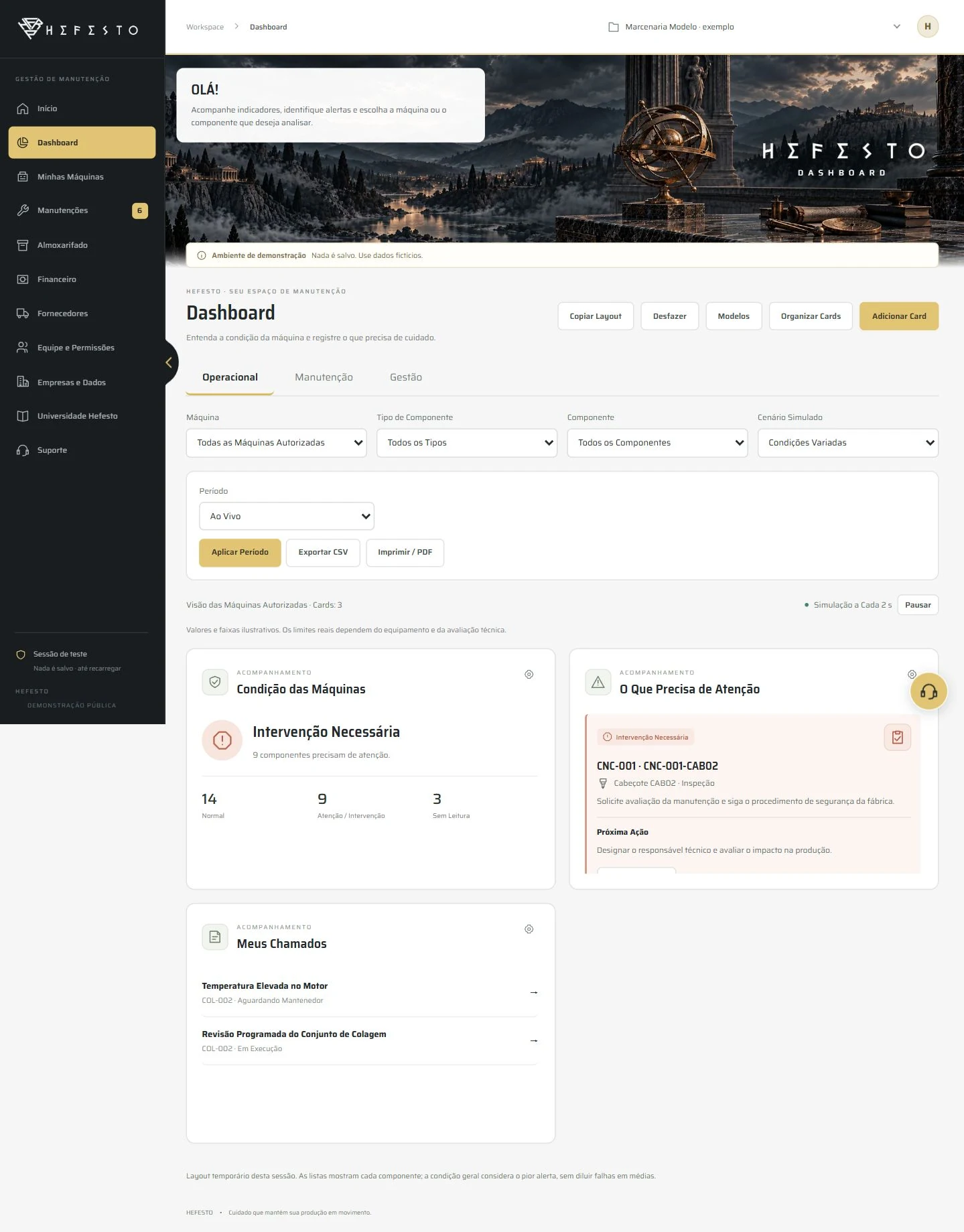
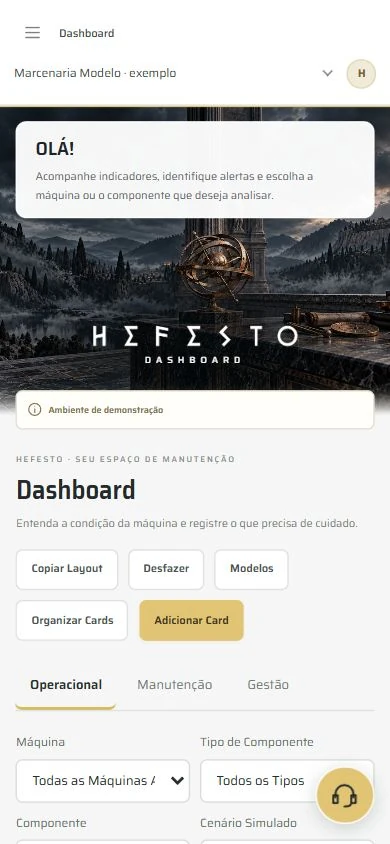
Demo with fictional data. Screenshots from 30 October 2026.
Click either screen to enlarge the actual interface.SOFTWARE / UI / INDUSTRYRFST / 2026
01 / Context
A stopped machine involves more than a repair. People need to know what happened, who can act, what was approved and which outcome was recorded.
The project began in Linhares, in the context of woodworking and furniture factories. My experience in maintenance, electromechanics and automation informed the problem and the workflows.
02 / Product
A maintenance request connects a machine issue with the decisions of those who operate, approve and execute. Explore four moments of the documented workflow.
1 / 4: Request and approval
01 / 04Request and approval
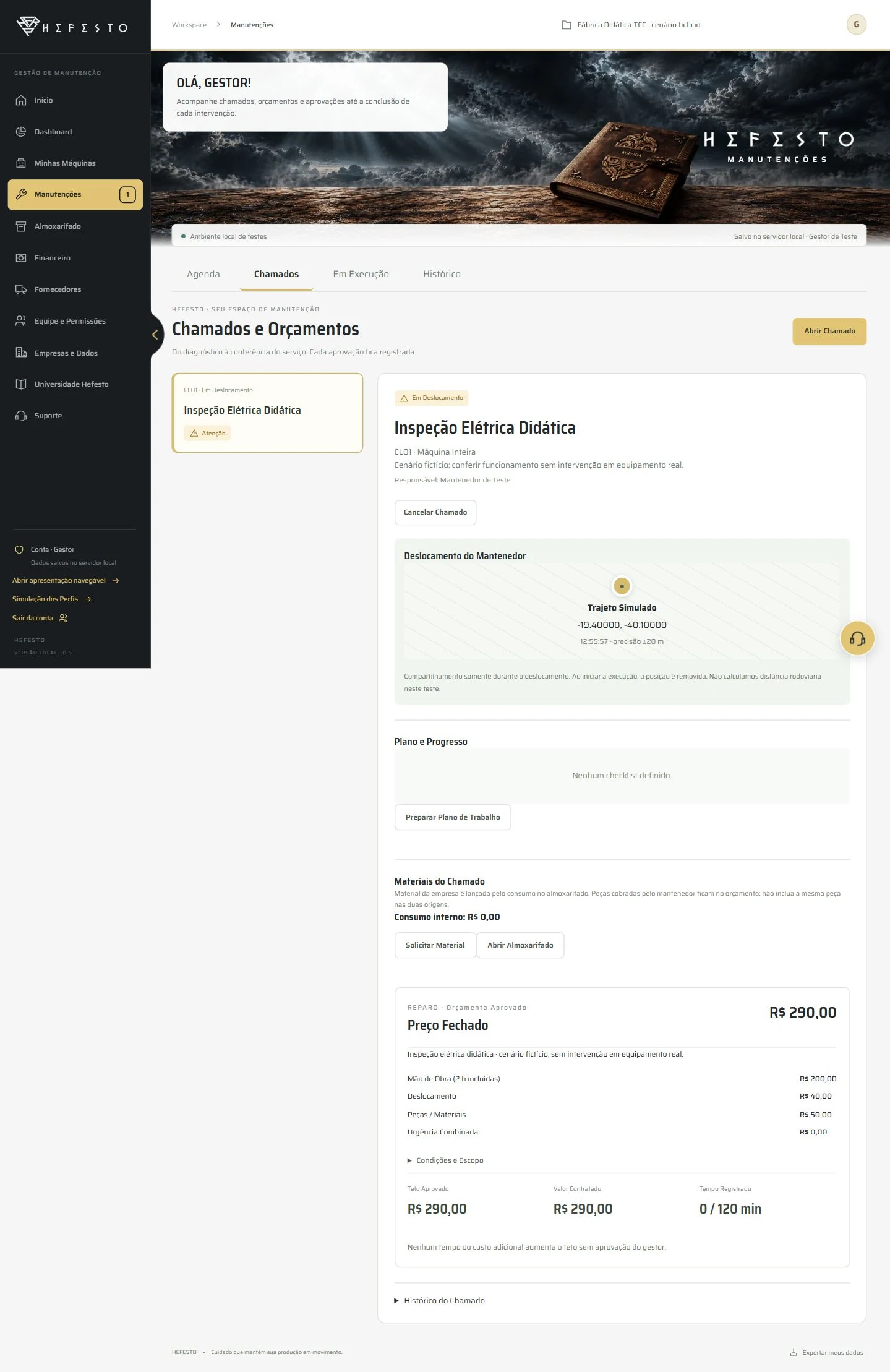
01 / Request and approval
A request connects the machine, assignee and quotation. Execution requires assignment and approval, keeping decisions attached to the work.
Managers and operators have different permissions.
02 / 04Execution
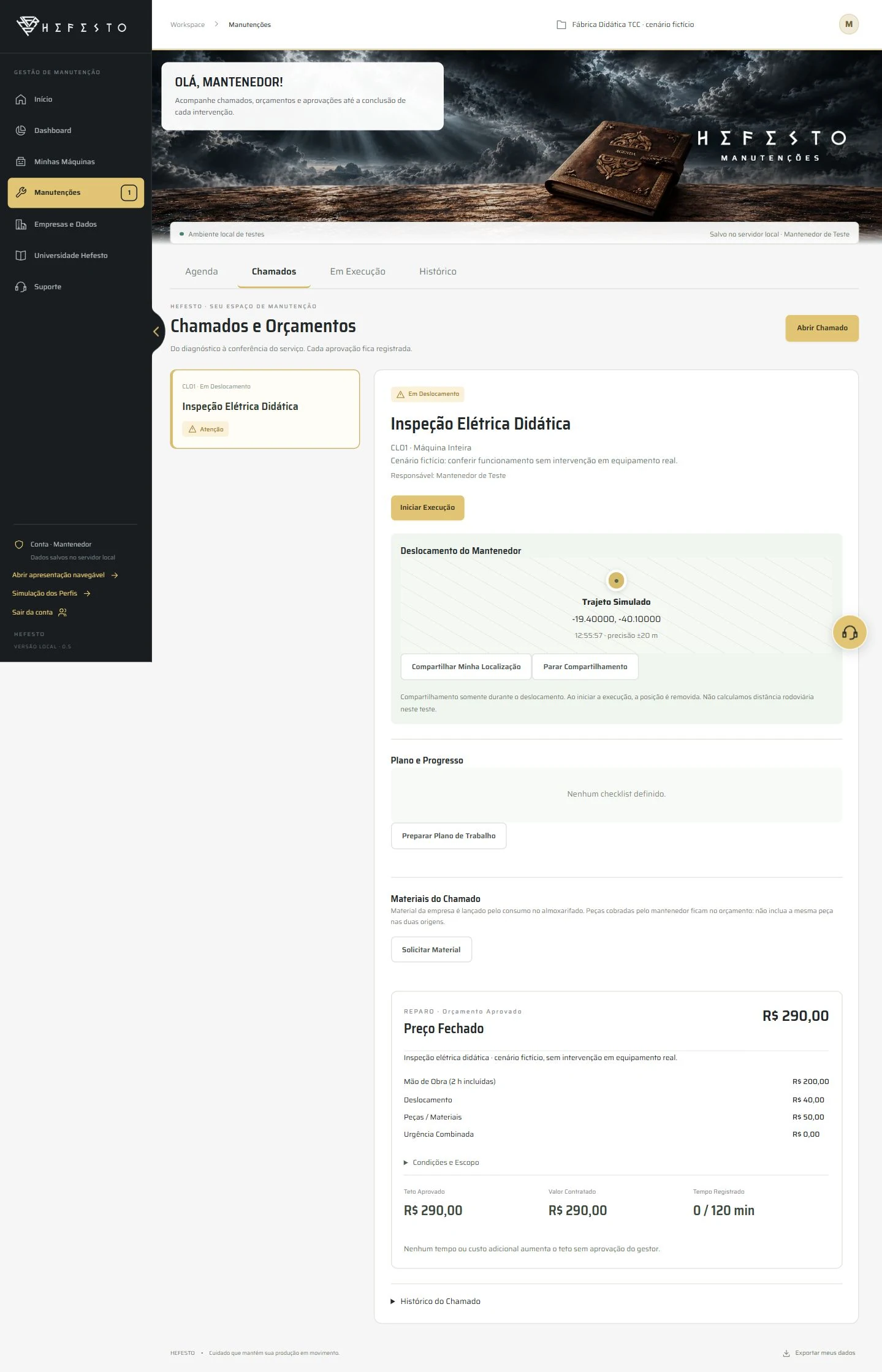
02 / Execution
The technician follows the assigned order and records time, materials, checklist and report. Additional costs require their own approval.
Location sharing ends when work begins.
03 / 04Verification
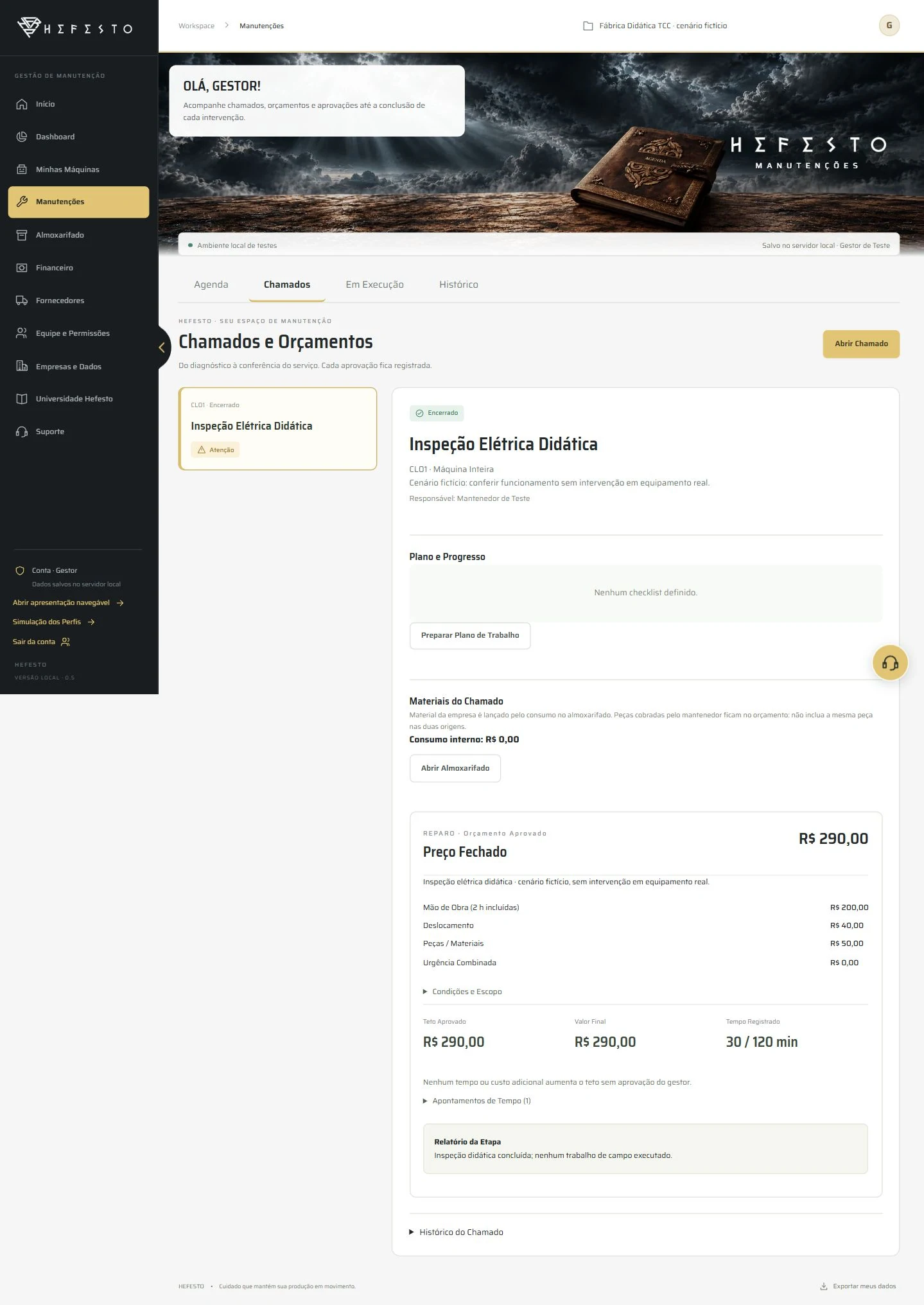
03 / Verification
The operator or manager checks operation before closure. Verification belongs to the workflow and remains linked to the request.
Closure is blocked while verification is pending.
04 / 04Cost and history
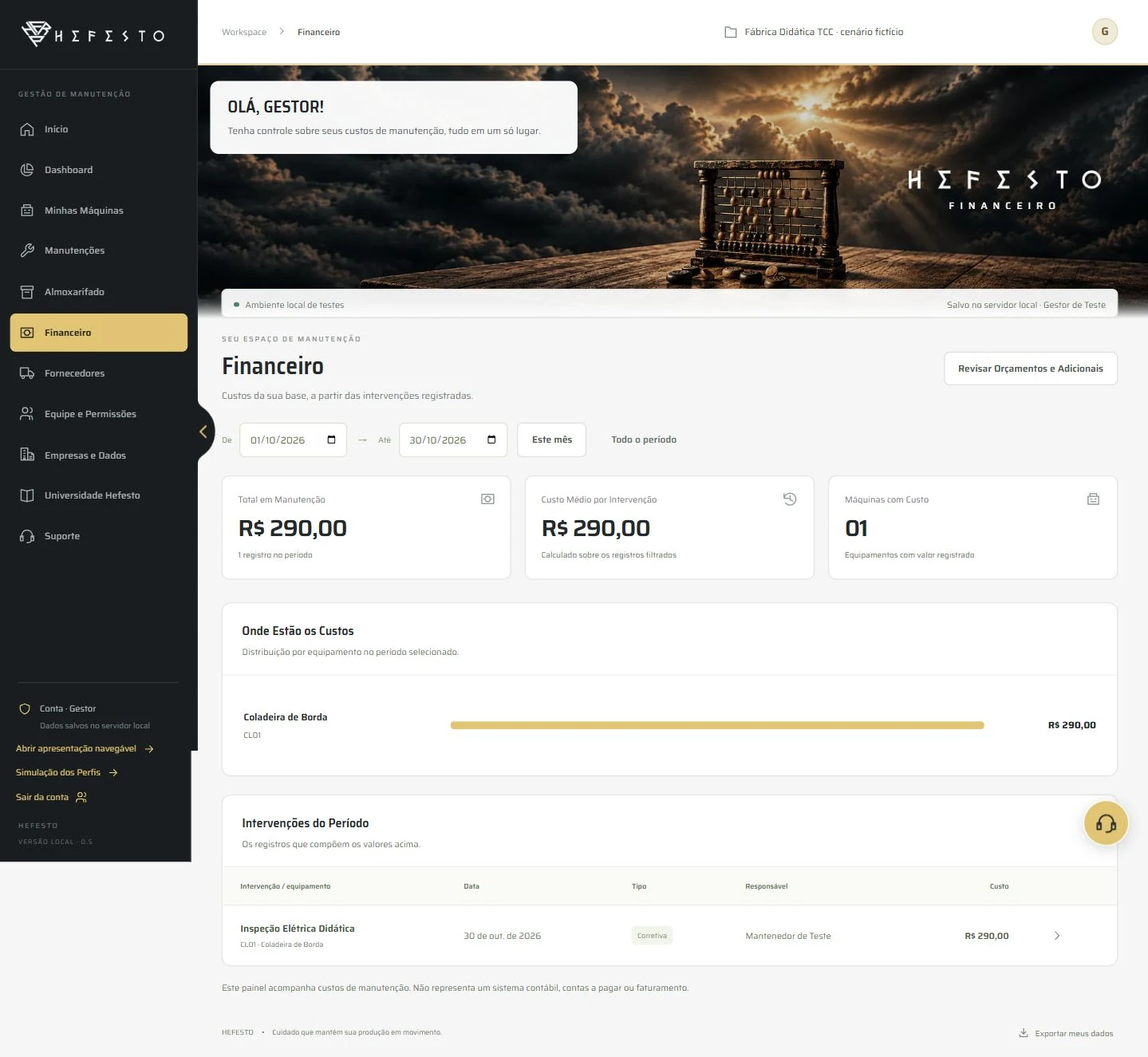
04 / Cost and history
Closure brings the outcome and recorded cost together. The scenario checked persistence after restart and protection against duplicate history.
R$ 290.00 is a fictional test value, not measured savings.
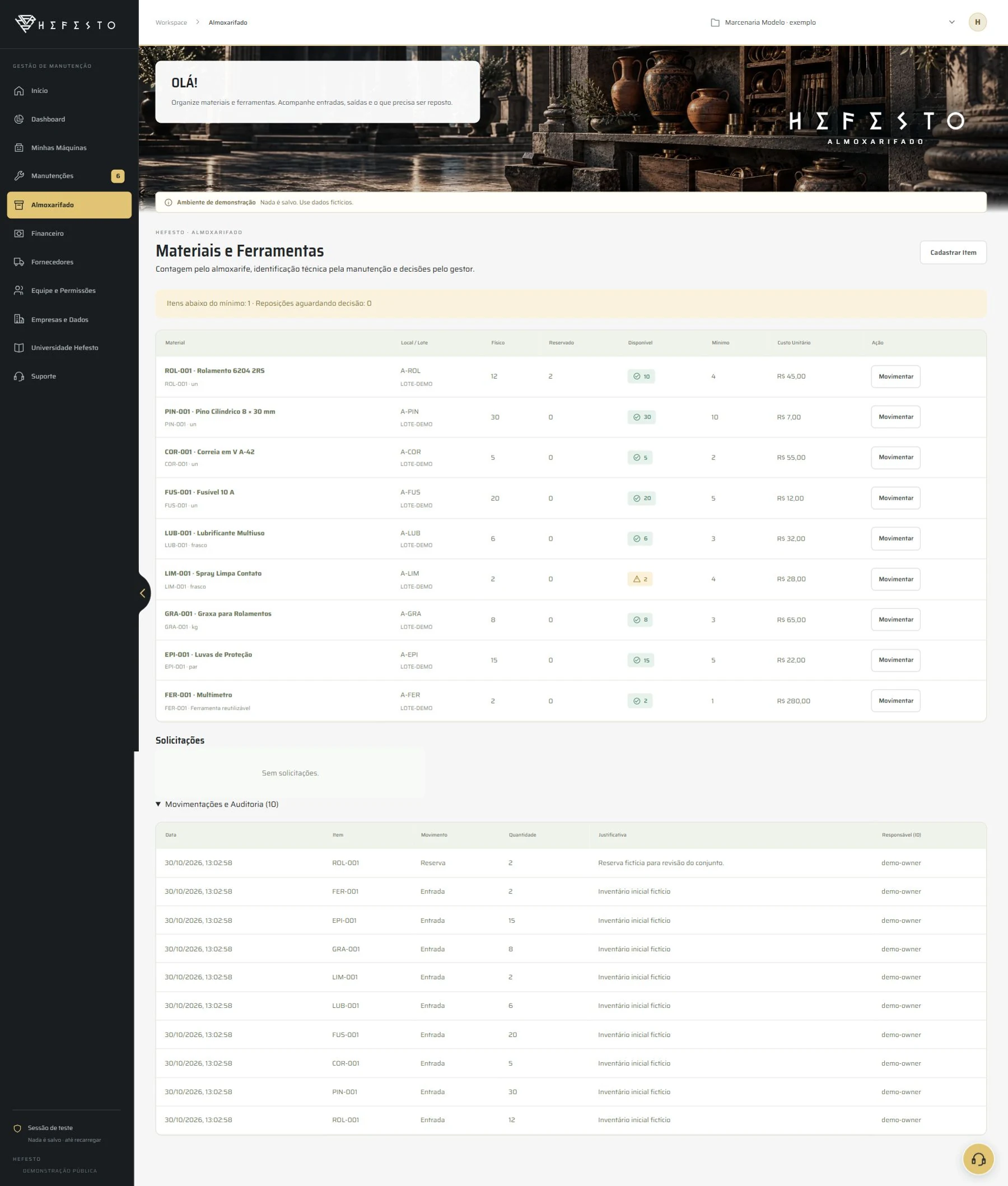
Registration, survey and technical verification have distinct states.
Reservation, delivery, consumption and returns linked to maintenance.
Each person accesses the authorized context of their company.
03 / Journey
Design, software and research developed in parallel, bringing industrial experience closer to a usable application.
The HEFESTO Works initiative records the intention to organize maintenance information and activities in Linhares.
Figma interface studies and an initial Python core explore the experience and terminal records.
The CLI evolves with SQLite. Academic work deepens requirements, architecture and UI/UX analysis.
The web application connects roles and maintenance stages. The final academic project consolidates the journey and controlled technical verification.
2026 / Academic research
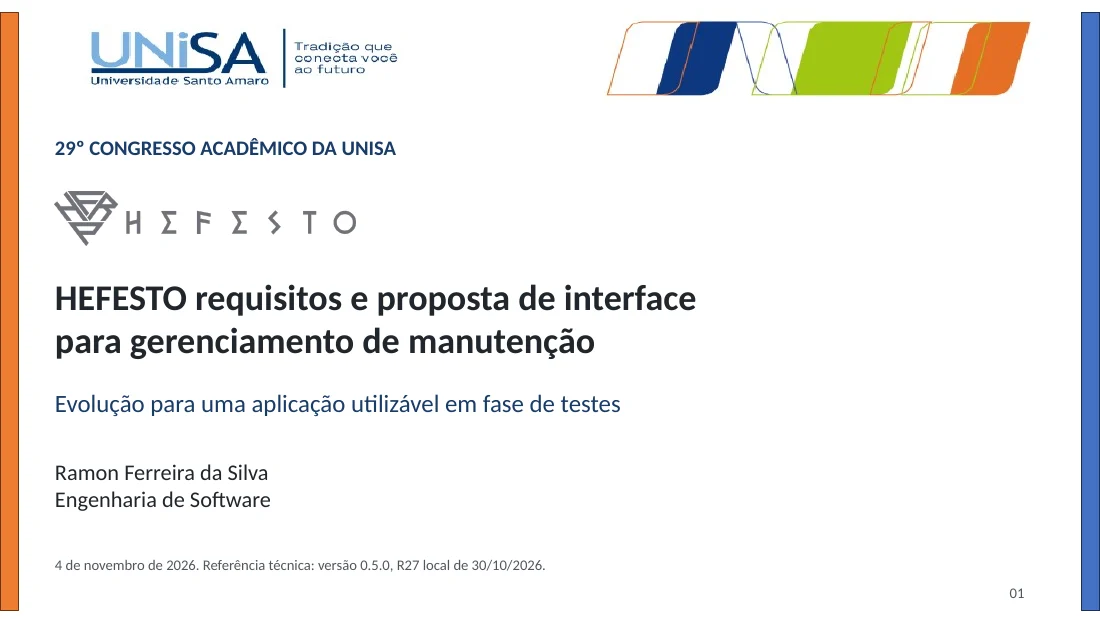
I brought the evolution of Hefesto into my Software Engineering bachelor’s studies at Unisa. The final project and presentation for the 29th Academic Congress bring together its history, decisions and research findings.
Education / Unisa
Bachelor’s program in Software EngineeringUniversidade Santo Amaro (Unisa)
I developed Hefesto during my Software Engineering bachelor’s program and received academic feedback on technical quality, architecture and user experience.
These records relate to the Python and SQLite stage and Figma interface studies that preceded the current web application.
Hefesto CMD / Python + SQLite
“Projeto com nível de qualidade excepcional.”Tutor Davi AndradeLaboratório de Programação · Unisa
Methodological rigor, language proficiency, code organization and an original solution.
Architecture / Figma prototyping
“Design e Desenvolvimento são os pontos fortes do trabalho.”Tutor Daniel BergProjeto de Sistemas · Unisa
Layered architecture, user focus and planning a solution for industrial maintenance.
Excerpts reproduced from my post about the assessments of that stage. Quotes remain in their original Portuguese; the historical slides are available to view.
04 / Design
HEFESTO combines Greek references, gold and light surfaces. The interface evolves to connect that identity with the tasks and states of the product.
Starting point / Visual study
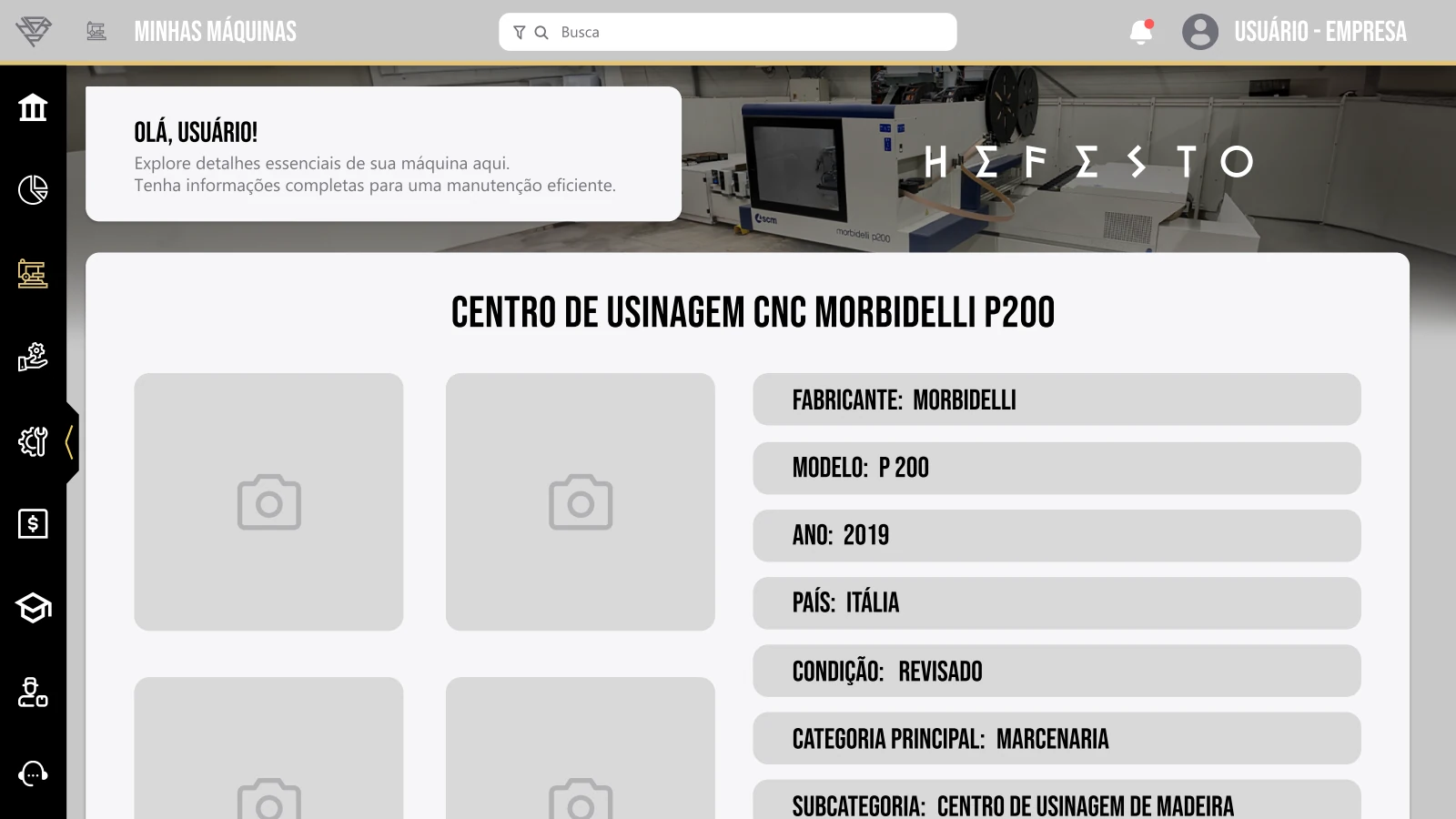
Interface evolution / Web application
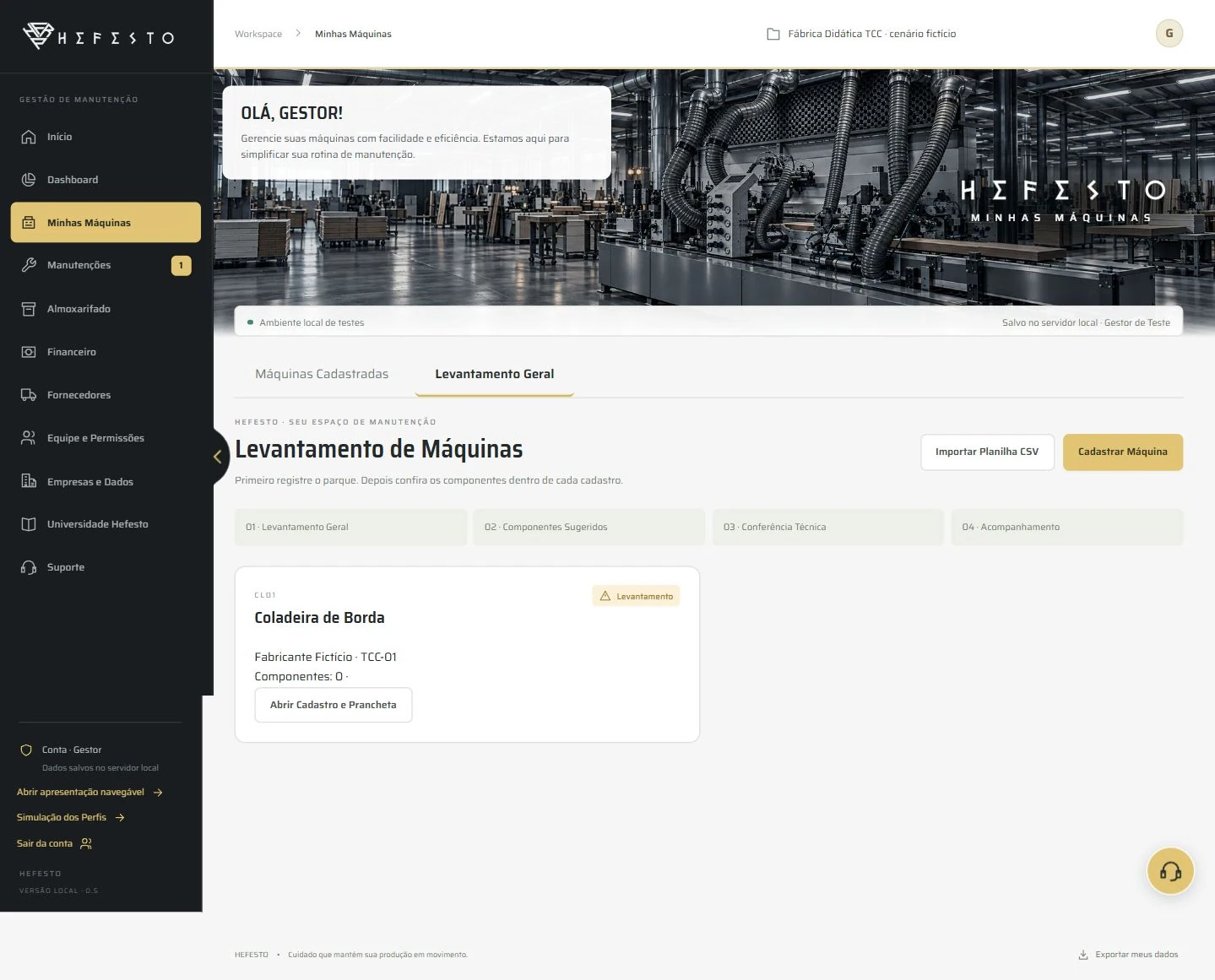
Interface in use
Each choice responds to a task. Registration makes its state explicit; the same dashboard shows how readability adapts from desktop to mobile.
01Registration / State
The survey label and registration stages show that adding a machine starts the process. Technical verification remains visible in the workflow.
02Dashboard / Desktop
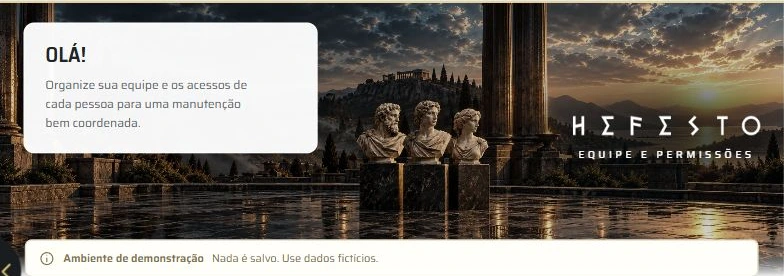
With side navigation open, the greeting, brand and controls occupy the available dashboard area without competing for space.
03Dashboard / Mobile
In the same dashboard, navigation collapses and the greeting, brand and controls rearrange into a column for the phone screen.
Responsive art direction
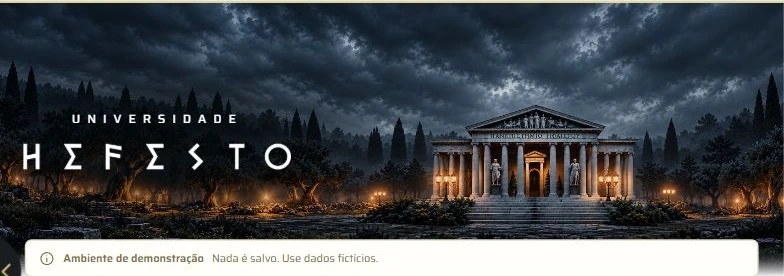
I created width-specific compositions instead of simply cropping one background. Responsive art direction preserves the image focal point, legibility and brand placement while accounting for the side menu.
1600 px
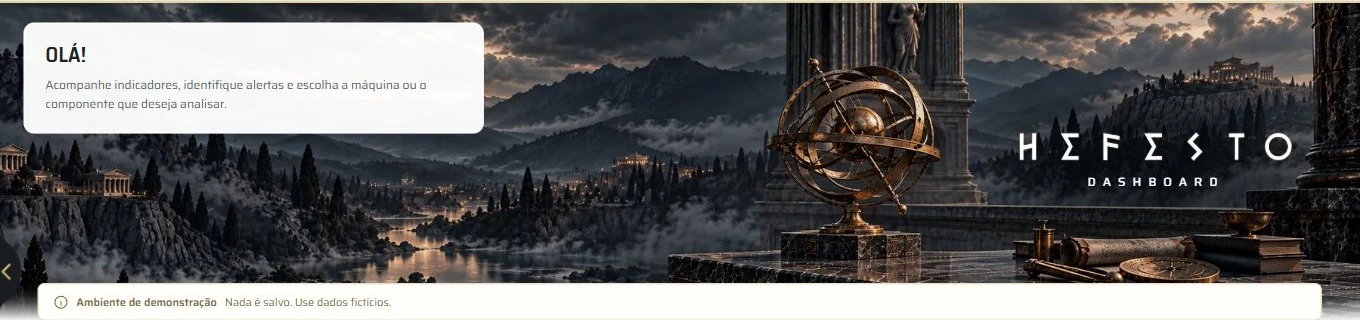
Dashboard01 / 06
1024 px

Dashboard01 / 06
390 px
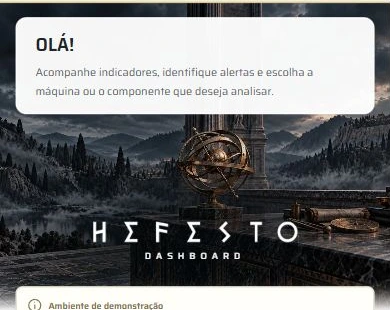
Dashboard01 / 06
Explore each size with its arrows or by dragging. Tap an image to enlarge.
Header compositions at 1600, 1024 and 390 px. Local captures from 12 November 2026.
05 / Engineering
The web application uses HTML, CSS and JavaScript in the browser, Node.js on the server and SQLite for persistence. The Python core belongs to the earlier command-line stage. Each layer has a role between the action on screen and the maintenance record.
The browser presents forms, navigation and SVG charts. JavaScript manages interface states and exchanges data with the API, while CSS adapts the composition to the available width.
The native HTTP server receives requests. Services check the session, company and permissions before executing commands and returning JSON responses.
Approval, assignment, materials, verification and closure follow shared rules. Server-side checks maintain the maintenance sequence beyond interface buttons.
The database stores accounts, operational records and history. Transactions and revision control protect updates and allow data to be recovered after a server restart.
Public exploration uses temporary data, separate from authenticated operational APIs.
Approval, verification and closure rules protect the sequence of work.
Node.js and SQLite form a compact deployment. Scale and prolonged operation require their own evaluation.
06 / Evidence
The results document software behavior in controlled scenarios. Each piece of evidence retains its date and scope.
R27 run on 30 October 2026
Controlled scenario on 30 October 2026
Applied research / 2026
Hefesto is my independent project, also developed as a research subject during my Software Engineering bachelor’s studies at Universidade Santo Amaro, Unisa. These documents connect the product’s history to the method and evidence of the final academic project.
Explore the archiveDocuments in Portuguese
01 Overview
A visual journey through the problem, product evolution and results. Material prepared for Unisa’s 29th Academic Congress.
Open PDF02 In-depth research
Method, architecture, the 2023 to 2026 history and test analysis. Includes the relationship between requirements, implementation and study limitations.
Open PDFAcademic records from 2026. Results refer to local revision R27 dated October 30, 2026, in controlled scenarios using fictional data.
The R28 record from 11 November 2026 confirms publication and specific responsive checks. That run also recorded 11 HTTP/network integration failures in the restricted environment. The 203 passed tests refer to R27, not a full R28 suite approval.
Participant use, physical devices, accessibility, load, recovery and industrial operation still require evaluation. This collection does not establish reduced downtime or measured industrial savings.
07 / Evolution
The next horizon connects management to machine condition. The proposed retrofit monitoring architecture collects data independently of the original equipment controls.
Proposed architectureIIoT
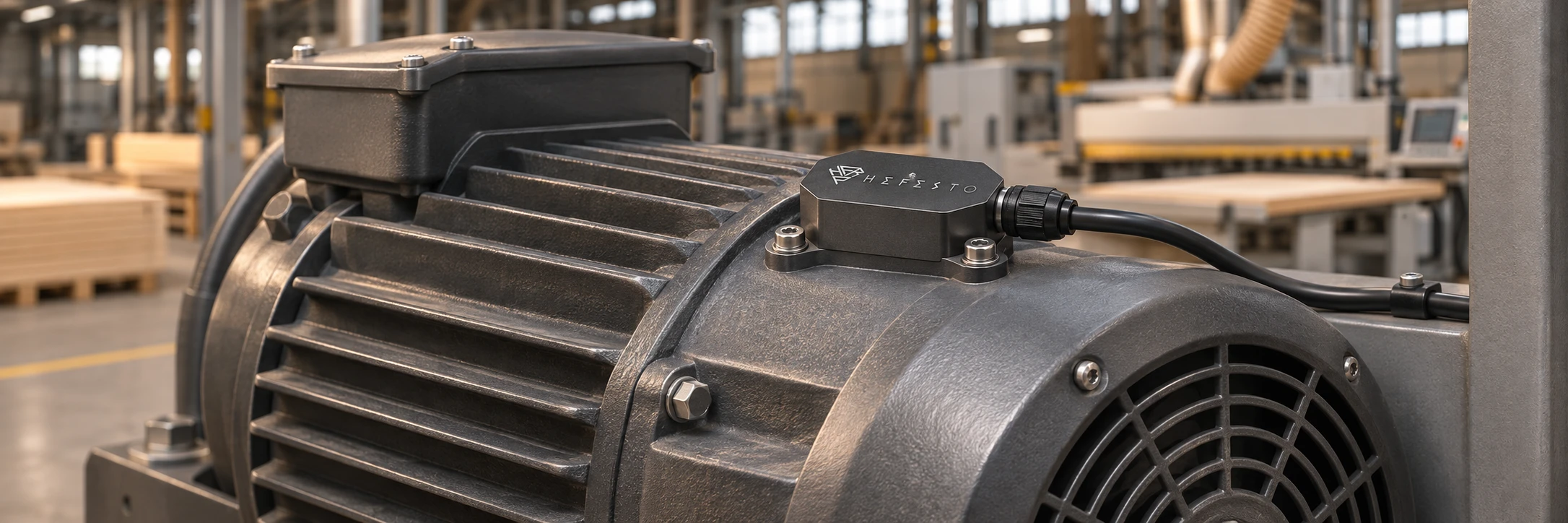
A module at the asset to capture vibration and temperature. The proposed installation brings measurements closer to the physical condition of the machine.
Concept visualization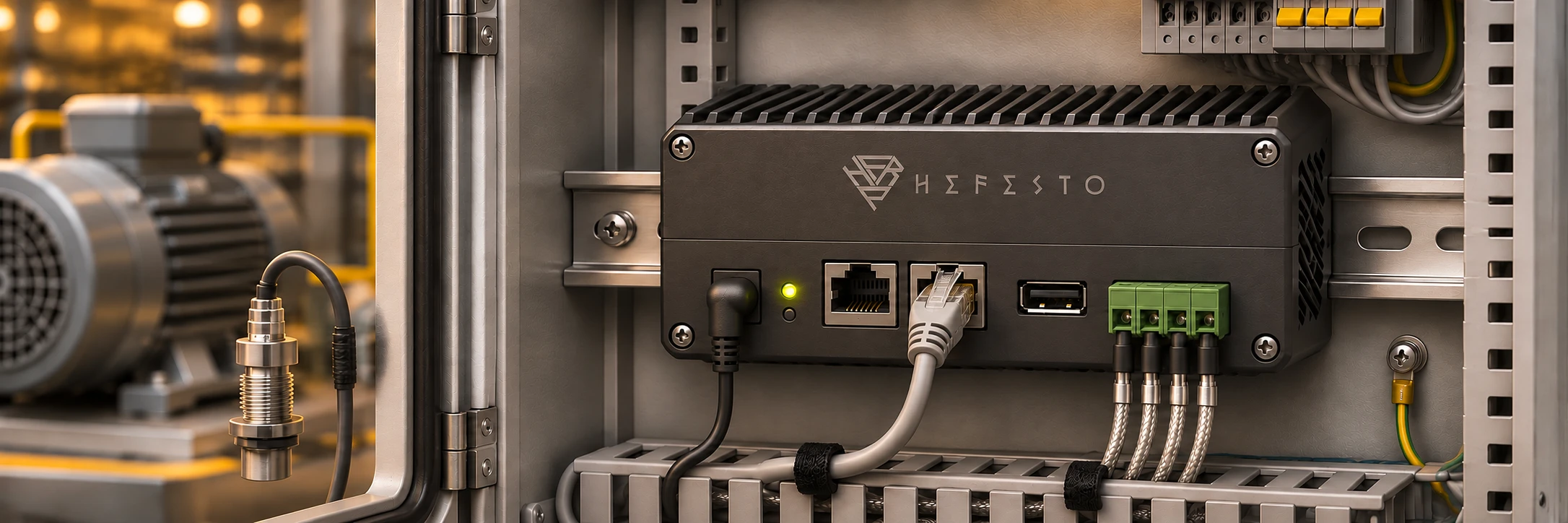
A local layer receives signals, identifies their source and buffers data before delivery. The proposal connects sensors to the network and future ingestion.
Concept visualization
The actual Hefesto interface brings context, monitoring and history together. Physical signal integration is the proposed evolution of this digital foundation.
Concept visualizationPhysical integration is planned. Demo readings are simulated. Bench work, communication, calibration and a documented pilot precede industrial validation.
HEFESTO / WEB
The public demo lets you navigate the experience with fictional data and temporary changes.